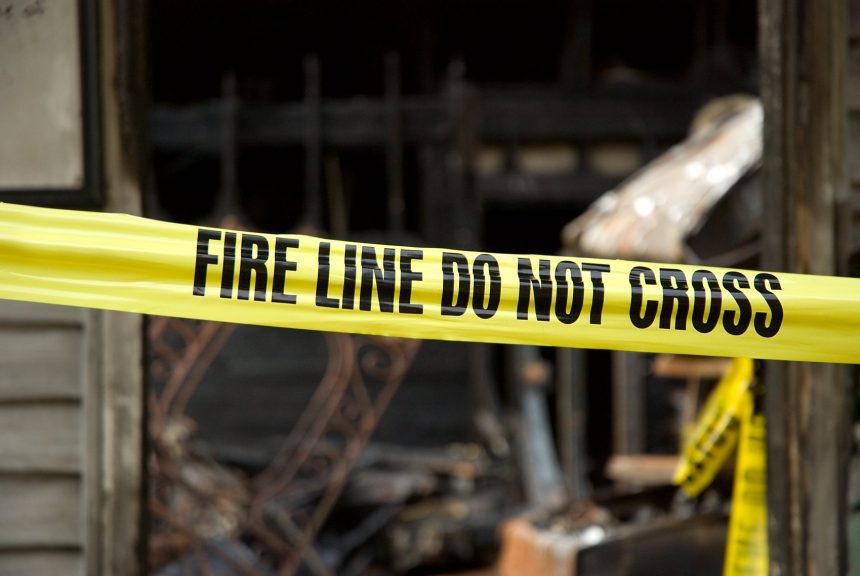
“I’m standing there watching my house burn, and I’m like, oh my goodness, this is everything that I worked for.”
When Rahkim Sabree, AFC followed a gut feeling to return home early from an outing in October, he didn’t expect to find his living room engulfed in flames.
“It’s when I reached the second level that I realized there was a fire, everything was black, the power was out, there was smoke everywhere,” says Sabree.
He attempted to put the fire out himself but had to make his way outside when he started to lose consciousness.
“I called 911, and they sent over the fire department. They were able to locate and save my dog Loki, which was a blessing.”
Within minutes, he saw the house he had worked so hard for and the life he had built disappear. The fire that tore through his home became a turning point — one that exposed the emotional weight of loss, the surprising financial realities of recovery and the crucial role home insurance can play when you lose it all.
Sabree is sharing his story not for sympathy, but for preparedness. By opening up about what he’s facing, he hopes readers walk away with a clearer picture of what having a total home loss is really like. Understanding your home insurance and having financial buffers in place can help you use your coverage more effectively, preserving the emotional bandwidth needed to focus on healing — not just survival.
After a house fire, insurance may not be enough without savings
The U.S. Fire Administration (USFA) reports that 344,600 homes, including one and two-family units and apartments, were impacted by residential fires in 2023. Most homeowners focus on carrying enough dwelling coverage, which pays to rebuild the physical structure of your home and is crucial for meeting your mortgage requirements. But other policy coverage types play a significant role in helping you rebuild your life after a loss.
After a few hours in the hospital, Sabree stayed at his mom’s house for a couple of days before moving into a hotel. Over 30 days later, he was still in temporary housing. “From a housing perspective, even a clothing perspective, I had to figure out ‘how do I establish safety in this moment?’” says Sabree.
Here’s where loss of use coverage — otherwise known as additional living expense (ALE) — comes into play.
When your home is uninhabitable from a covered claim, ALE helps pay for temporary housing, pet boarding, laundry services, food and other expenses incurred from having to live away from your home. ALE is automatically built into every homeowner policy and typically has a payout limit of 20% of your dwelling coverage. For example, a homeowner’s insurance policy with $300,000 in dwelling coverage would likely have $60,000 in ALE coverage.
ALE is processed differently by every carrier, and complicated losses can slow payments. Sabree’s temporary housing is being arranged through a claims management company, for example. But thanks to his emergency savings and community support, he hasn’t had to pay out of pocket for housing — at least, not yet. But many families don’t have that safety net.
Claim payouts can take anywhere from a few days to several weeks — longer if the claim is complex, as in the case of a total loss of a home. Yet 24% of Americans have no emergency savings, and 30% have less than three months’ worth, according to Bankrate’s Annual Emergency Savings Report. That leaves many homeowners covering basic living costs out of pocket while still paying the mortgage on a home they can’t live in.
“Some carriers, especially surplus lines, make homeowners pay ALE costs, like a hotel, then reimburse them,” says Chantel Roberts, CPCU, an insurance claims expert and educator. “Food is almost always out-of-pocket first, and receipts are required.”
Since ALE isn’t used as often as other parts of a home insurance policy, confusion surrounding this coverage is common. It’s designed to only cover the increase in your living expenses when all or part of your home is unsafe to live in. For example, Roberts notes that if your kitchen is unusable but the rest of the house is still considered livable, your insurer might provide a temporary solution like a two-burner stove, rather than pay for a full hotel stay.
And importantly, it’s the insurer — not the homeowner — who determines whether the home is considered livable. Feeling uncomfortable is very different from living in a structure that is truly uninhabitable. Since a full rebuild can take months, homeowners who are eligible for an ALE payment but overspend early on may exhaust their coverage long before they can return home.
“I’m seeing more homeowners run out of ALE funds, usually because they didn’t understand the coverage and expectations weren’t set properly. If someone chooses a five-star hotel and champagne dreams instead of comparable living expenses, the money won’t last.” – Chantel Roberts, CPCU, AIC, RPA, ITP
Adding an endorsement to increase your ALE coverage is typically inexpensive. You may want to consider contacting your agent to quote extra coverage if:
- Local rent or hotel prices are high
- You have a large family
- You have pets that would need boarding
- You work from home
- You have a home that would take a long time to rebuild
The reality of personal property coverage after a fire
Another coverage that is often overlooked is personal property coverage. Most homeowners’ and renters’ insurance policies include personal property coverage at actual cash value (ACV), which encompasses the replacement cost minus depreciation. For renters, personal property is the first coverage they select on their policies; for homeowners, coverage usually defaults to 50% of the dwelling limit — for instance, $150,000 on a policy with $300,000 in dwelling coverage.
For many, $150,000 sounds like a lot of coverage to replace some furniture and clothing. But what if you had to replace everything you owned, down to your toothbrush? “All the clothes that I’m wearing right now have been given to me,” says Sabree. “All of the clothes that I owned, outside of the clothes that were on my back, were in the house and damaged by either smoke, water or fire.”
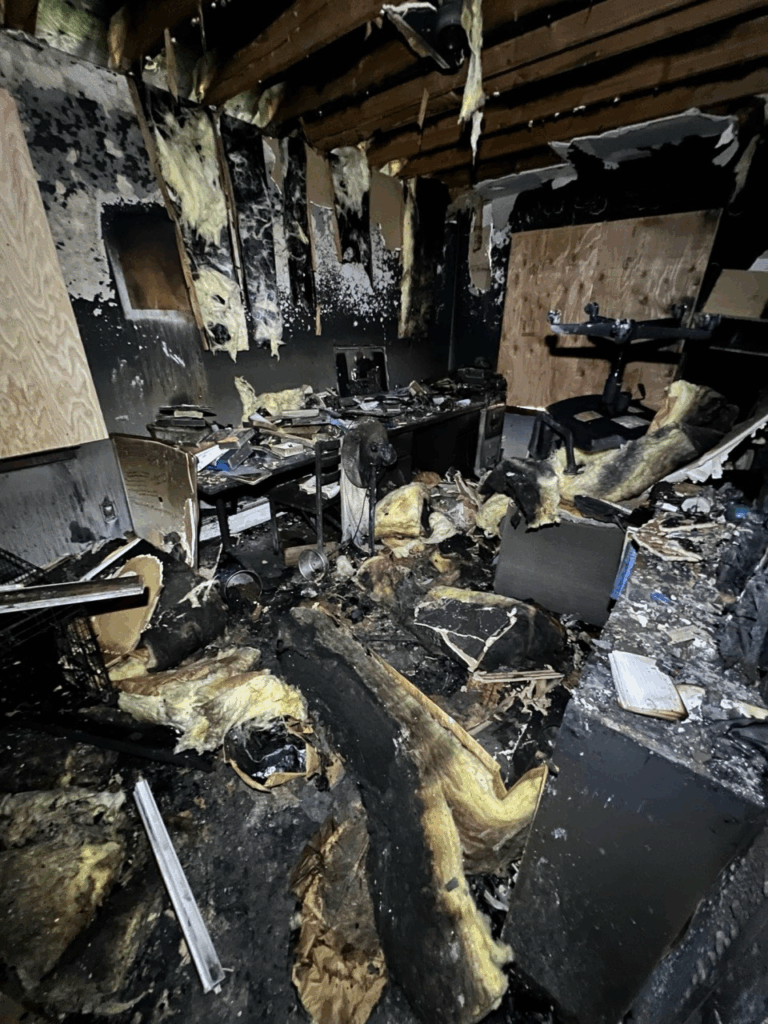
Standard personal property coverage rarely stretches as far as people imagine. Even with a replacement cost endorsement (which pays to replace items at the current market cost), homeowners must pay upfront for new items before receiving reimbursement, a hurdle many don’t anticipate.
“Insurance adjusters typically determine the age, value and depreciation of items,” says Roberts. “The insurer pays actual cash value first, and the homeowner gets depreciation back only after replacing the item and proving the cost.” For example, let’s say you paid $5,000 for your sofa seven years ago and it costs $6,000 for a new one now. Your carrier may pay you $3,000 for the ACV of your old sofa. Once you purchase the new one and submit proof, they will send you the other $3,000.
Policy contracts typically allow a year to replace belongings, yet without savings, some homeowners can only afford to replace a fraction of what they have lost. It isn’t ideal, but as Sabree points out, it’s still better than starting from nothing.
“Until you’re in a situation where you have to replace everything, you don’t realize how important insurance is,” says Sabree. “If you don’t want to go into debt — or deeper into debt — it becomes a financial buffer. We all hope we never have to use it, and it feels like you’re paying extra for something you’ll never need. But when you do need it, it’s there.”
Navigating the financial and emotional trauma of home fires

“The biggest heartbreak was losing my books,” says Sabree. “I had books that were 20 years old. Books that were given to me by my grandfather, who’s no longer here. Inscriptions written on the cover by him that I could refer back to when I wanted to hear from him. You can’t put a price on that.”
Sabree works as an accredited financial therapist, providing education to help people overcome financial anxiety, stress and systemic barriers to reach financial success. In fact, his book, Overcoming Financial Trauma, was published less than 30 days after he lost his home. The irony isn’t lost on him that he has to work on his own personal trauma while juggling speaking engagements and the claims process.
When we asked him what it’s like having to follow his own advice, he said, “Sobering and ironic. It’s a reminder that trauma — and recovery — can happen to anyone, regardless of knowledge or experience.”
This is the part of losing your home to a fire that homeowners’ insurance can’t fix. But it’s one that shouldn’t be ignored. Shock, mourning and symptoms from post-traumatic stress disorder (PTSD) are some of the few emotional barriers homeowners may deal with after a fire. Even when the fire is out, homeowners can find themselves reliving the experience when they return to the home during the claims process.
Along with reduced focus, memory issues and irritability, what Sabree calls “trauma brain”, he described some moments as “embarrassing and invasive” — seeing inventory technicians comb through his belongings, picking up burnt, soggy clothing and tossing them into a pile. To add insult to injury, on a return visit with a plumber he discovered someone had broken in and stolen all the copper piping and heating units. They even manage to steal one of the few good pairs of remaining shoes, leaving their own in its place.
Still, Sabree sees the silver lining. Since he works for himself, he has “freedom” that many other homeowners don’t. Traumatic events can have a long-term physical and mental impact, and since he can make his own schedule, he can deal with his feelings when they arise. “From a trauma lens,” says Sabree, “there have been things that come up on day 15 that didn’t on day 3. There are things I have only just now been able to navigate on day 29 that I haven’t been able to deal with earlier.”
While home insurance can’t fix everything, it can ease some of the financial burden. For others going through similar situations, Sabree advises:
“Seek safety, then stabilize that safety emotionally and financially. Protect your mental space. And financially, focus only on essential expenses, housing, utilities and food, before worrying about replacing everything.”
Why we ask for feedback
Your feedback helps us improve our content and services. It takes less than a minute to
complete.
Your responses are anonymous and will only be used for improving our website.
Help us improve our content
Read the full article here