




What’s worse: a weak job market or stubborn inflation?
Most people would say they don’t want either. Rising prices make it harder to afford the things you need, even when you’re working. A weak job market makes it tougher to ask for a raise, find a better position or land a job at all. Both hitting at once — like what’s happening right now — creates a cycle of unaffordability: Your expenses go up, but your pay can’t keep pace.
That question is likely to be the central debate at the Federal Reserve’s next meeting on Oct. 29-30. And if officials cut interest rates for the second time — as they’re widely expected to this week — they’ll reveal that they believe protecting jobs matters more for Americans right now.
There is no getting around the fact that the Fed is taking inflation less seriously than earlier this year. Price stability is taking the backseat to the labor market and economic support.
— Stephen Kates, CFP, Bankrate financial analyst
Lower rates could offer some relief for borrowers — but new risks for the economy
The U.S. central bank has a dual mandate: keep prices stable and ensure that everyone who wants a job can find one. Right now, both goals are moving in the wrong direction.
Prices rose 3 percent over the past year through September, a percentage point hotter than the Fed’s 2 percent target and the fastest pace since January, according to the latest data from the Bureau of Labor Statistics. At the same time, jobseekers are getting hired at the slowest rate since 2013, Labor Department data shows. Job growth has flatlined, and unemployed workers are staying out of work for more than six months, on average.
That dilemma puts the Fed in a tough spot. What’s good for the labor market can be bad for inflation — and vice versa. Lower rates could reignite demand heading into the holiday shopping season and also make it easier for companies to pass along higher costs from tariffs. Keeping rates high, though, could deter companies from creating more jobs.
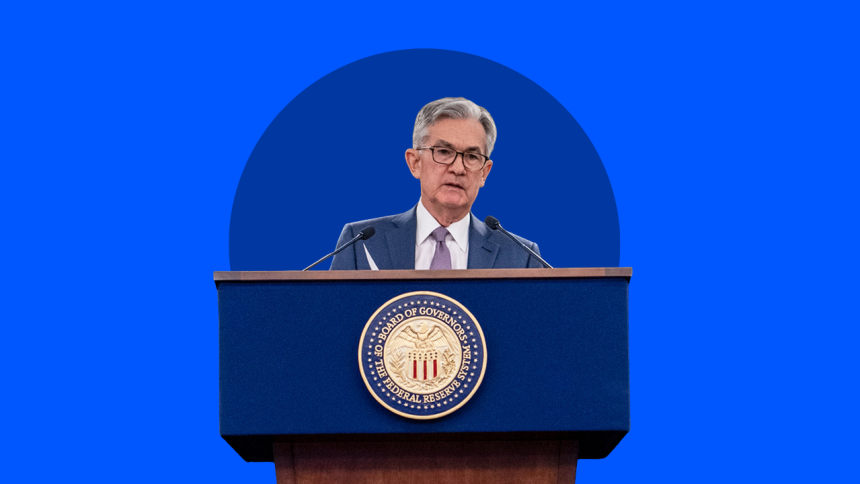
There is no risk-free path for policy as we navigate the tension between our employment and inflation goals. In this less dynamic and somewhat softer labor market, the downside risks to employment appear to have risen.
— Fed Chair Jerome Powell at a mid-October public appearence
Those tradeoffs also mean the Fed’s next moves could shape Americans’ purchasing power in bigger ways than just making it cheaper to borrow money. Both paths could have consequences if they end up being the wrong medicine for the economy.
Complicating matters further, the ongoing government shutdown has delayed key economic data, forcing policymakers to make decisions without a full picture of how the economy is doing.
“You can think about their policy decision as one of least regret,” says Vincent Reinhart, chief economist at BNY Investments who spent more than two decades at the Fed. “What will they regret more? They’ll regret it if inflation is very slow to return to goal and backs up, but they’ll also regret it if the economy weakens more and they weren’t leaning into it.”
An October rate cut seems like a near certainty, but the real question is what happens after
Not all Fed officials view these trade offs in the same way. Seven of the Fed’s 19 policymakers don’t want to cut interest rates any more this year, projections updated in September show. Two policymakers think the Fed should cut just one more time this year.
Investors still expect the Fed to cut rates in October and December, with three more reductions projected for 2026, according to CME Group’s FedWatch tool. No future rate cuts, however, are set in stone.
“Given the data available, an October cut seems assured, but nothing else is guaranteed,” Kates says. “Tariff threats are back in the news and the longer the shutdown lasts, the harder it will be for the Federal Reserve to make educated decisions.”
The policymakers backing rate cuts reiterate that they’re not abandoning their inflation goal. Instead, they argue that a weaker labor market could help bring price pressures down on its own.
When the job market cools, workers have less leverage to ask for raises. They could pull back on spending when their incomes don’t stretch as far, taking away companies’ ability to lift prices. Some companies may then respond by pausing hiring or even laying off employees, deepening the slowdown.
The inside story of America’s slowing job market
Workers are facing longer job searches, while small business owners — squeezed by higher costs from tariffs and slowing sales — are struggling to make up the difference.
Read more
It’s not without risk. A false assumption that post-pandemic inflation would only be temporary forced the Fed to rapidly raise interest rates in 2022 when they realized they were behind the curve.
“He’s trying to land this plane to get that middle ground of keeping the economy chuggling along but having to accept a little bit more inflation,” says Uk-Sun Kim, head of credit originations at TD Bank. “It’s like trying to do heart surgery with a butter knife.”
Here’s what you should do with your money in today’s ‘worst of both worlds’ economy
Interest rate cuts might seem like a good thing — especially if you’ve been feeling priced out of the economy thanks to three years of historically high interest rates. Experts, however, say this round of rate cuts isn’t for good reasons: It’s a sign that the economy is losing steam, and it could come with elevated inflation.
“Americans should recognize that the cuts we are getting are not the celebratory kind,” Kates says. “We haven’t conquered inflation. Rather, we are surrendering to a weakening economy. Americans’ financial security is primarily in their own hands, and they should take steps to ensure they are prepared for good and bad outcomes.”
Here are the three most important steps to take with your finances right now.
1. Pay down high-cost debt
Credit card rates remain punishingly high, still hovering above 20 percent even after four rate cuts. If you’re carrying high-interest debt on a credit card, consider utilizing a balance transfer card with a 0 percent introductory annual percentage rate (APR) to help you speed up your repayment. For larger balances, a nonprofit credit counseling agency may be able to help you negotiate lower rates and create a structured repayment plan.
2. Make sure your savings are working for you
With inflation creeping higher again, cash sitting in a checking or low-rate savings account is effectively losing value. High-yield savings accounts are still offering returns above the current inflation rate, helping your emergency fund grow faster and preserve more of your purchasing power.
3. Build up your emergency fund
A softer job market can mean smaller raises, fewer opportunities and — worst case — job loss. Financial planners suggest keeping at least six months of essential expenses in savings. If that feels out of reach, start small. Cut back on discretionary spending like streaming subscriptions or takeout, and redirect that cash to your emergency fund. Any little bit will help.
The Fed’s in a no-win situation. Move too fast, and they could risk higher inflation. Move too slow, though, and they could jeopardize jobs. With so much uncertainty, financial experts recommend an age-old strategy: Prepare for the worst, but hope for the best.
“Federal Reserve officials are not magicians or conductors who can shape the economy to their wills,” Kates says. “There is no right call at the moment, and we won’t be able to measure this decision against the alternative possibilities, except in our imagination.”
Why we ask for feedback
Your feedback helps us improve our content and services. It takes less than a minute to
complete.
Your responses are anonymous and will only be used for improving our website.
Help us improve our content
Read the full article here


