




For years, Americans have heard this mantra: There isn’t enough housing in the United States. The ongoing shortage explains why affordability is such a challenge, and why so many Americans are spending their 30s as renters rather than homeowners.
The reality has grown a bit more complicated.
As the housing market cools, a new narrative is emerging. Home prices now are falling in half of the nation’s 20 largest metro areas, according to the most recent Case-Shiller housing index. Builders are so desperate to sell new homes in Texas and Florida that they’re subsidizing mortgage rates as low as 0.99%. Discouraged home sellers are yanking the for-sale signs out of their front yards.
If you’re a frustrated would-be homebuyer or a potential seller, you’d be reasonable to wonder what gives? Is there a housing shortage or are there too many houses? The answer is yes to both, with some nuance.
The long-term nationwide shortage of homes remains firmly in place. At the same time, local gluts of homes for sale are a reality. If you’re buying or selling a home in the near future, this shift will shape your experience. For buyers in some markets, trends have suddenly shifted in your favor — prices haven’t returned to pre-pandemic levels, but there’s definitely more room to bargain. The opposite is true for sellers — you now need to rein in your expectations by lowering your asking price.
“There is a difference between what is currently for sale and what is needed for the long term,” says Joel Berner, senior economist at Realtor.com. “It is two different kinds of ways of quantifying what is happening with housing supply.”
The first type of housing supply: Long-term, nationwide supply
First, some high-level stats: The U.S. Census Bureau reports there are nearly 340 million Americans living in some 133 million households. More than 86 million of those households are owner-occupied homes. By contrast, the pace of existing home sales over the past few years has been about 4 million homes a year. In other words, only a tiny fraction of the overall housing supply comes on the market at a given moment.
Since the Great Recession, U.S. homebuilders have been building homes at much lower rates than they once did. The result is an overall shortage of about 4 million housing units nationally, Berner says.
That ongoing lack of supply has reverberated throughout the national housing market. Many Americans, especially in the priciest markets, have decided that rather than trying to buy, they’ll keep renting.
The second type of housing supply: The inventory of homes for sale right now (or at any given moment)
Viewed through a national lens, the U.S. housing market is desperately in need of a building spree. But zoom into local markets, and the picture changes.
The housing market, once on fire in such Sun Belt states as Arizona, Florida and Texas, keeps cooling. For evidence, look no further than the latest Case-Shiller index, which shows home values fell in half the nation’s 20 largest metro areas. Tampa’s 4% decline was the weakest showing, followed by the Phoenix metro area’s 2% drop.
Or you could look at how individual home sellers are dealing with the market: Nearly 85,000 U.S. sellers took their homes off the market in September, up 28% from a year earlier and the highest level for that month in eight years, according to a report by real estate brokerage Redfin.
Delistings were most common in Miami, where 7.8% of all listings were pulled off the market, followed by Fort Lauderdale at 7.7%, Redfin says.
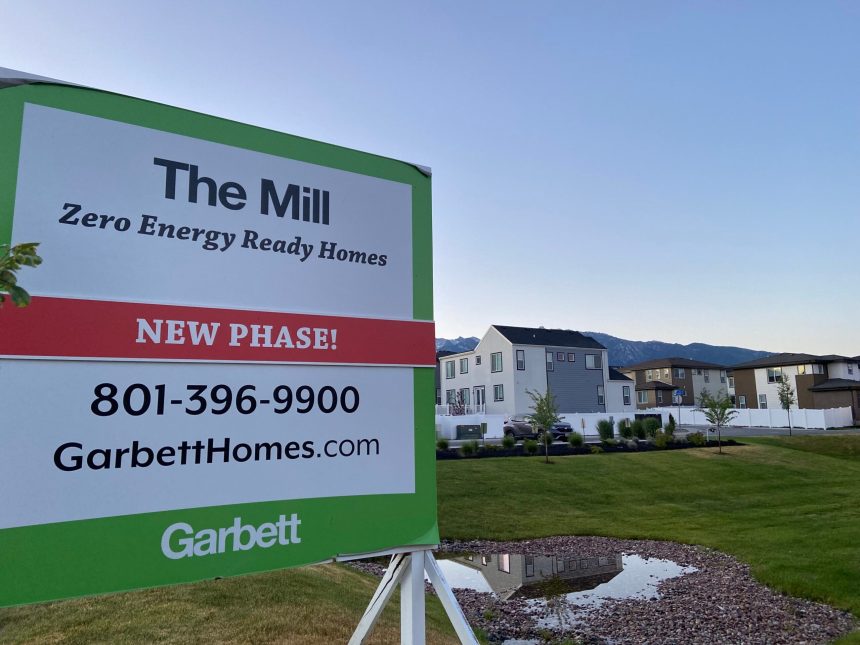
Then there are those builder deals: In parts of Texas and Florida, builders are offering sweet mortgage rates and hefty commissions to real estate agents. D.R. Horton, the nation’s largest homebuilder, is advertising mortgage rates as low as 0.99% in some communities.
This type of supply is highly localized. If you’re looking for a $300,000 house in Tyler, Texas, or a $600,000 golf course home in Sarasota, Florida, or a $500,000 condo in Miami, there are plenty of options. But if you’re shopping in Manhattan or Northern California or even Chicago, supply is still tight.
It’s a reality that reflects the quirks of the housing market: Sellers of cars or TVs or jeans can address shortages by ramping up production and shipping their wares to where they’re needed. But that’s not how real estate markets function.
“What we are seeing is what happens if homes are not in the right place or if they’re not affordable,” Berner says. “Houses are not fungible. That’s ultimately the issue here.”
What to know if you’re buying or selling a home
The housing market has shifted sharply in the past few years. Some things to keep in mind:
Buyers now have negotiating power
Buyers had no choice but to move aggressively during the pandemic. Houses sold quickly and for more than the asking price. That’s no longer the case. Now, buyers have time to shop, and there’s an opportunity for negotiation over price and other terms.
Sellers have to get realistic
The flip side of the slowing market is that sellers no longer are in complete control. During the pandemic, sellers had so many offers that they could cherry-pick only the best offers — the ones for the highest price, and with no contingencies around financing or inspections. Sellers who thought they could command top dollar are resetting expectations. According to real estate brokerage Redfin, fully 70% of U.S. home listings were “stale” in September, meaning they had been on the market for at least 60 days without going under contract. So if you’re motivated to sell, you might need to lower your price compared to what you might have asked a year or two ago.
Location matters
There is no national housing market, and where you are buying or selling very much matters. Home sales are soft in the Sun Belt, but they’re still going strong in parts of the Midwest and Northeast. Your experience as a buyer or seller will depend on what’s happening in your local market.
“The geographic rotation is striking. Markets that were pandemic darlings — particularly in Florida, Arizona and Texas — are now experiencing outright price declines,” says Nicholas Godec of S&P Dow Jones Indices, which puts out the widely followed Case-Shiller home price index. “Meanwhile, traditionally stable metros in the Northeast and Midwest continue to post solid gains, suggesting a reversion to pre-pandemic patterns where job markets and urban fundamentals drive appreciation rather than migration trends and remote-work dynamics.”
The affordability squeeze is still in effect
Yes, home prices are dipping a bit in parts of the country. And no, they haven’t fallen enough to reverse the huge price appreciation seen during the pandemic. So sticker shock has eased a bit, but it hasn’t gone away.
Pay attention to market trends, but don’t be held captive by them.
Buying or selling a home is a highly individual decision, one based on your unique needs and situation. So if you’re ready to buy — your credit score is solid, your down payment savings are sufficient, you plan to be in the home for at least three years — it’s probably best to pull the trigger, especially if you live in a place where the market has turned in your favor. Similarly, if you’re not ready to buy, don’t let price declines or mortgage incentives persuade you to act hastily.
Why we ask for feedback
Your feedback helps us improve our content and services. It takes less than a minute to
complete.
Your responses are anonymous and will only be used for improving our website.
Help us improve our content
Read the full article here


