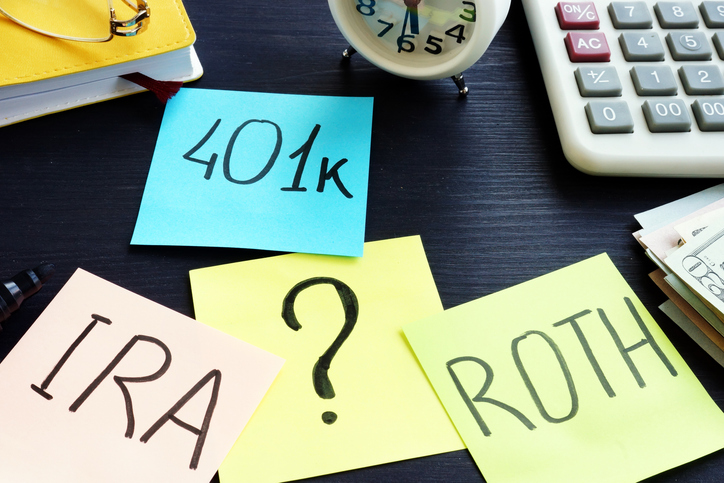
After decades of saving, one of the central challenges of retirement is turning accumulated savings into a reliable source of income. For many retirees, that income comes from multiple sources rather than a single paycheck. Each source offers a different combination of reliability, growth potential and risk. Understanding what each source may provide, along with its potential limitations, can help you build a retirement income plan that lines up with your finances.
A financial advisor can help you figure out which mix of income sources actually fits your retirement.
1. Social Security
Social Security is the foundation of most retirement income plans and the one source nearly every retiree shares. It helps to look at what it offers and where it falls short:
- Overview: Social Security is a government-administered, inflation-adjusted benefit based on your 35 highest-earning years. The average retired-worker benefit is roughly $2,081 per month as of the April 2026 Social Security Administration snapshot, following the 2.8% cost-of-living adjustment that took effect in January 2026. 1 Full retirement age is 67 for anyone born in 1960 or later.
- Opportunity: Few income sources combine all three of Social Security’s advantages. Payments are guaranteed for life, backed by the federal government, and adjusted annually for inflation. Timing also offers a lever. Claiming as early as 62 is possible, but delaying past full retirement age has benefits. You earn delayed retirement credits of about 8% per year up to age 70, permanently increasing the monthly check.
- Risk: Social Security is designed to replace only about 40% of pre-retirement income for the average worker. This means it rarely covers expenses on its own. Claiming early permanently reduces the benefit by as much as 30% versus waiting until full retirement age. Plus, questions about the program’s solvency add a layer of uncertainty to future planning.
2. Pensions (Defined Benefit Plans)
Once the backbone of American retirement, traditional pensions have become far less common in the private sector. However, they remain significant for many public-sector and union retirees.
- Overview: A defined benefit plan is an employer-funded arrangement that pays a set monthly benefit in retirement. This is typically based on your salary history and years of service. Unlike a 401(k), the employer bears the investment risk and promises a specific payout rather than a contribution.
- Opportunity: A pension delivers predictable lifetime income with no investment decisions required. Many plans include survivor benefits that continue payments to a spouse. For those who have one, it functions much like a second Social Security check.
- Risk: Access is the biggest limitation, as relatively few private-sector workers still earn a traditional pension. Many pensions also pay a fixed amount that does not adjust for inflation. As a result, purchasing power erodes over time. This is a real concern with consumer prices rising 3.8% over the year ending in April 2026. 2 Benefits also depend on the financial health of the plan and its sponsor. A financial advisor can help you weigh a lump-sum offer against a lifetime monthly pension.
3. Retirement Accounts (401(k)s and IRAs)
Tax-advantaged accounts are where most workers accumulate their savings, and in retirement they become an income source through withdrawals.
- Overview: Accounts such as 401(k)s, 403(b)s and IRAs come in traditional (pre-tax) and Roth (after-tax) versions. Traditional accounts grow tax-deferred and are taxed as ordinary income on withdrawal, while qualified Roth withdrawals are tax-free. Traditional accounts are subject to required minimum distributions beginning at age 73 under current law.
- Opportunity: These accounts offer flexibility that guaranteed sources do not. You control the timing and size of withdrawals and can leave assets invested for continued growth. You can also use Roth funds to pull tax-free income in years when managing your tax bracket matters. Roth accounts also carry no required minimum distributions for the original owner.
- Risk: Drawing down an invested portfolio exposes you to sequence-of-returns risk, where withdrawing money during a market downturn can permanently shrink the balance. Required minimum distributions, starting the year you turn 73 or the year you turn 75 if born in 1960 or later, force taxable withdrawals on traditional accounts whether you need the money or not. Meanwhile, withdrawals before age 59 ½ generally trigger a 10% penalty. Without a disciplined withdrawal strategy, savings can be depleted too soon.
4. Investment Income: Dividends, Interest and CDs
Beyond tax-advantaged accounts, many retirees aim to live partly off the income their portfolio generates rather than selling underlying assets, a strategy that looks different today than it did a few years ago:
- Overview: This category covers income produced by a brokerage portfolio: dividends from stocks, and interest from bonds and certificates of deposit (CDs). The shared logic is collecting yield from your holdings while leaving the underlying principal in place.
- Opportunity: Current conditions favor conservative income. As of mid-2026, top CDs are paying roughly 4.00% to 4.30% APY with FDIC backing up to applicable limits, and 10-year Treasuries yield around 4.55% with the full backing of the U.S. government. Dividend-paying stocks add the potential for both income and long-term growth that fixed instruments cannot match.
- Risk: Equity income alone tends to be thin, since the S&P 500 dividend yield has hovered near historic lows in recent years. Interest income from CDs and bonds can fall when rates decline, and shifts in Federal Reserve policy can change the picture quickly. When inflation runs higher than the yield a fixed instrument pays, real purchasing power quietly erodes even when the nominal payment looks attractive.
5. Annuities
For retirees who want to convert savings into a paycheck they cannot outlive, annuities offer a contractual guarantee that other income sources do not:
- Overview: An annuity is a contract with an insurance company that converts a lump sum into a stream of income, optionally guaranteed for life. Fixed annuities provide predictable payments, while variable and indexed annuities tie income to market performance with varying degrees of protection. As a benchmark, a fixed immediate annuity bought by someone in their mid-60s might generate $2,500 per month from a $400,000 premium, depending on age, gender and contract terms.
- Opportunity: An annuity transfers longevity risk to the insurer, which is its defining benefit: the income keeps coming no matter how long you live. That predictability can cover essential expenses and fill the gap between guaranteed income sources and monthly spending, freeing the rest of a portfolio to be invested for growth.
- Risk: The trade-off for guaranteed income is reduced access to your money. Withdrawing large sums can trigger surrender charges, and some contracts, especially variable annuities, carry ongoing fees that erode returns. Fixed payments also lose purchasing power to inflation unless you pay extra for a cost-of-living rider, and every guarantee depends on the issuing insurer’s financial strength.
6. Continued Work and Other Income
A final category covers income that does not fit neatly into the others: earnings from work, rental property, and home equity. For many retirees, these fill gaps or delay drawing down savings.
- Overview: This includes wages from part-time or consulting work, net income from rental property, and home-equity tools such as reverse mortgages that convert built-up equity into cash flow. Surveys consistently show that a large share of workers plan to keep earning in some form during retirement.
- Opportunity: Continuing to work delays portfolio withdrawals and can increase an eventual Social Security benefit. It also provides structure and engagement beyond the paycheck. Rental property can supply ongoing monthly cash flow, and a reverse mortgage can unlock home equity without requiring a sale.
- Risk: Earning a wage before full retirement age can temporarily reduce Social Security benefits, with $1 withheld for every $2 earned above the 2026 limit of $24,480 3 (those withheld amounts are later restored through a higher benefit). Health can force an earlier exit from work than planned, rental income carries property and tenant risk, and a reverse mortgage reduces the equity available to heirs.
Bottom Line

Many retirees find it difficult to rely on a single source of income. A durable plan may blend guaranteed sources, like Social Security, pensions and annuities, with growth-oriented sources such as retirement accounts and investments, plus supplemental income from work or property. The right mix can depend on your expenses, other income and risk tolerance. With fixed-income yields currently strong and equity dividend yields historically low, now may be a good time to revisit how your income sources fit together.
“Almost all retirees will need to puzzle together varied sources of income to meet their retirement expense needs. Working with a financial advisor who has access to sophisticated modeling tools can help obtain peace of mind in your retirement plan by visualizing your income streams and stress-testing your plan with possible market or lifestyle changes,” said Tanza Loudenback, CFP®.
Tanza Loudenback, CFP® provided the quote used in this article. Please note that Tanza is not a participant in SmartAsset AMP, is not an employee of SmartAsset and has been compensated. The opinion voiced in the quote is for general information only and is not intended to provide specific advice or recommendations.
Retirement Investing Tips
- A financial advisor can help you build a retirement income plan that blends your different sources of income and manages the tax implications along the way. Finding a financial advisor doesn’t have to be hard. SmartAsset’s free tool matches you with vetted financial advisors who serve your area, and you can have a free introductory call with your advisor matches to decide which one you feel is right for you. If you’re ready to find an advisor who can help you achieve your financial goals, get started now.
- If your retirement income sources are relatively straightforward, a financial advisor may be enough. If your situation involves more complex tax or estate planning needs, you may also want to consider a CPA or tax attorney.
Photo credit: ©iStock.com/designer491, ©iStock.com/Greggory DiSalvo
Read the full article here