





THIS POST MAY CONTAIN AFFILIATE LINKS. PLEASE SEE MY DISCLOSURES. FOR MORE INFORMATION.
Staying in shape doesn’t have to mean paying $60, $100, or even $200 a month for a gym membership you’ll only use a handful of times.
In fact, some of the best workouts don’t require a gym at all.
You don’t need rows of expensive machines, fancy workout classes, or the latest fitness gadgets to improve your health. A little creativity, some consistency, and a willingness to get moving are often all it takes.
Whether you’re trying to lose weight, build strength, improve your endurance, or simply become more active, there are countless ways to exercise that cost little to nothing.
The best part?
Many of these ideas don’t just save you money—they may actually save you time, help you stick with your fitness goals, and even make exercising more enjoyable.
Here are 20 budget-friendly ways to stay fit without draining your wallet.
1. Turn Walking Into a Daily Habit

Walking might be the most underrated exercise there is.
Because it feels easy, many people assume it doesn’t “count” as a real workout.
Nothing could be further from the truth.
A brisk walk improves cardiovascular health, burns calories, lowers stress, and can even help improve blood sugar after meals. Best of all, it’s something almost anyone can do regardless of age or fitness level.
The secret isn’t taking one long walk every Saturday.
It’s finding ways to walk throughout your day.
Park farther from the entrance at the grocery store.
Take the stairs instead of the elevator.
Go for a 15-minute walk after dinner.
Walk while talking on the phone instead of pacing around the kitchen.
Those little decisions add up surprisingly fast. An extra 2,000 to 3,000 steps every day can make a meaningful difference over the course of a year.
And unlike driving somewhere to exercise, walking often saves money on gas while helping your health.
2. Build a Workout Using Only Your Body Weight
One of the biggest fitness myths is that you need a room full of equipment to get stronger.
You don’t.
Your own body provides plenty of resistance.
Push-ups work your chest, shoulders, and triceps.
Squats strengthen your legs and glutes.
Lunges improve balance and build lower-body strength.
Planks challenge your core.
Burpees combine strength and cardio into one movement that most people have a love-hate relationship with.
Mix a handful of these exercises together and you can create a full-body workout in less than 30 minutes.
The best part is that bodyweight workouts grow with you.
Can’t do a full push-up yet?
Start on your knees or against a wall.
Need more of a challenge?
Increase the reps, slow down the movement, or try more advanced variations.
No membership required.
3. Try High-Intensity Interval Training (HIIT)
If you always feel like you don’t have enough time to exercise, HIIT might become your new best friend.
Instead of working out for an hour, HIIT alternates short bursts of intense activity with brief recovery periods.
For example, you might:
- Jump rope for 30 seconds.
- Rest for 30 seconds.
- Do squats for 30 seconds.
- Rest again.
- Repeat for 20 minutes.
Because you’re working harder during each interval, these workouts often deliver a lot of benefit in a short amount of time.
Many HIIT workouts require no equipment at all and can be done in your living room, garage, backyard, or even a hotel room while traveling.
They’re also easy to customize based on your fitness level.
4. Use YouTube as Your Personal Trainer
Twenty years ago, hiring a personal trainer could cost hundreds of dollars each month.
Today?
Thousands of certified trainers post free workouts on YouTube every day.
Whether you’re interested in:
- yoga
- Pilates
- strength training
- kickboxing
- stretching
- mobility
- dance workouts
- beginner fitness
there’s probably an entire channel devoted to it.
The biggest advantage is variety.
If you’re bored with one workout, try another tomorrow.
You can also find programs designed for every fitness level, from complete beginners to experienced athletes.
The only equipment you’ll usually need is enough space to move around.
5. Create a Home Gym Using Everyday Items
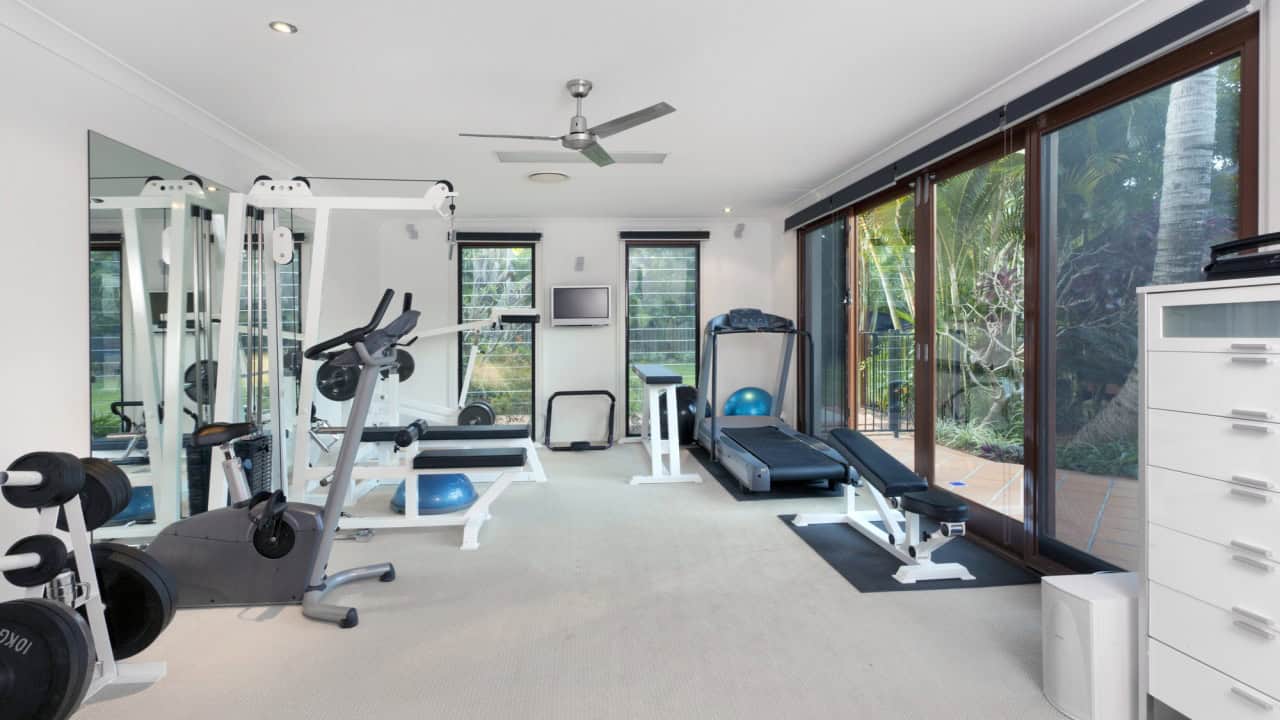
Don’t let a lack of equipment become an excuse.
Look around your house.
You probably already own enough “gym equipment” to get started.
A backpack filled with books becomes a weighted vest.
Laundry detergent containers make surprisingly good dumbbells.
A gallon of water weighs about eight pounds.
Sturdy dining room chairs can be used for step-ups, incline push-ups, or tricep dips.
Even a towel can become a workout tool by using it for stretching or as a slider on hardwood floors.
If you eventually decide to spend a little money, a resistance band or jump rope costs a fraction of a gym membership and can provide years of workouts.
Sometimes the most effective equipment is already sitting in your house—you just haven’t thought of it that way yet.
6. Turn Your Local Park Into an Outdoor Gym
Many parks offer much more than open grass and walking trails.
Look around and you’ll often find:
- fitness stations
- pull-up bars
- basketball courts
- tennis courts
- pickleball courts
- soccer fields
- walking paths
Some parks even include outdoor exercise equipment that’s completely free to use.
And don’t overlook the playground.
While it’s designed for kids, many adults use monkey bars for pull-ups, benches for step-ups, and sturdy railings for incline push-ups.
Fresh air, sunshine, and a change of scenery can also make workouts feel less like a chore.
Sometimes simply getting outside is enough to motivate you to move.
7. Start the Couch to 5K Program
Running doesn’t have to begin with five miles.
In fact, it shouldn’t.
That’s why the Couch to 5K program has helped millions of people become runners.
The program starts with short intervals of walking and jogging before gradually increasing your running time over several weeks.
By the end, many participants are able to complete their first 5K.
The biggest reason people quit running is trying to do too much too soon.
Couch to 5K removes that problem by giving you a structured plan that’s realistic and beginner-friendly.
All you need is a decent pair of running shoes and the willingness to show up three times a week.
You may surprise yourself with how quickly your endurance improves.
8. Join a Running or Walking Group
One of the hardest parts of exercising isn’t the workout.
It’s showing up.
That’s why running and walking groups are so effective.
When people expect you to be there, you’re much less likely to skip your workout because you “just aren’t feeling it.”
Most communities have free running clubs that meet weekly, and many also have casual walking groups for people who aren’t interested in running.
Besides the accountability, you’ll probably discover new routes, learn training tips from experienced runners, and maybe even make a few friends along the way.
If there isn’t an organized group nearby, invite a neighbor or coworker to walk with you a few mornings each week.
Exercise becomes much easier when it feels like catching up with a friend instead of completing another chore.
9. Give Pickleball a Try
There aren’t many sports that have exploded in popularity as quickly as pickleball.
One reason is that it’s incredibly beginner-friendly.
You don’t have to be an elite athlete to have fun.
The court is smaller than a tennis court, the rules are easy to learn, and games move quickly enough that you’ll get plenty of exercise without feeling like you’re running a marathon.
Many public parks now have free pickleball courts, and local recreation departments often organize free or inexpensive open-play sessions where beginners are welcome.
Even if you’ve never picked up a paddle before, don’t let that stop you.
Most pickleball players are eager to teach newcomers because the sport grows by getting more people involved.
And unlike staring at a treadmill for 45 minutes, you’ll probably forget you’re exercising.
10. Sneak in “Exercise Snacks”
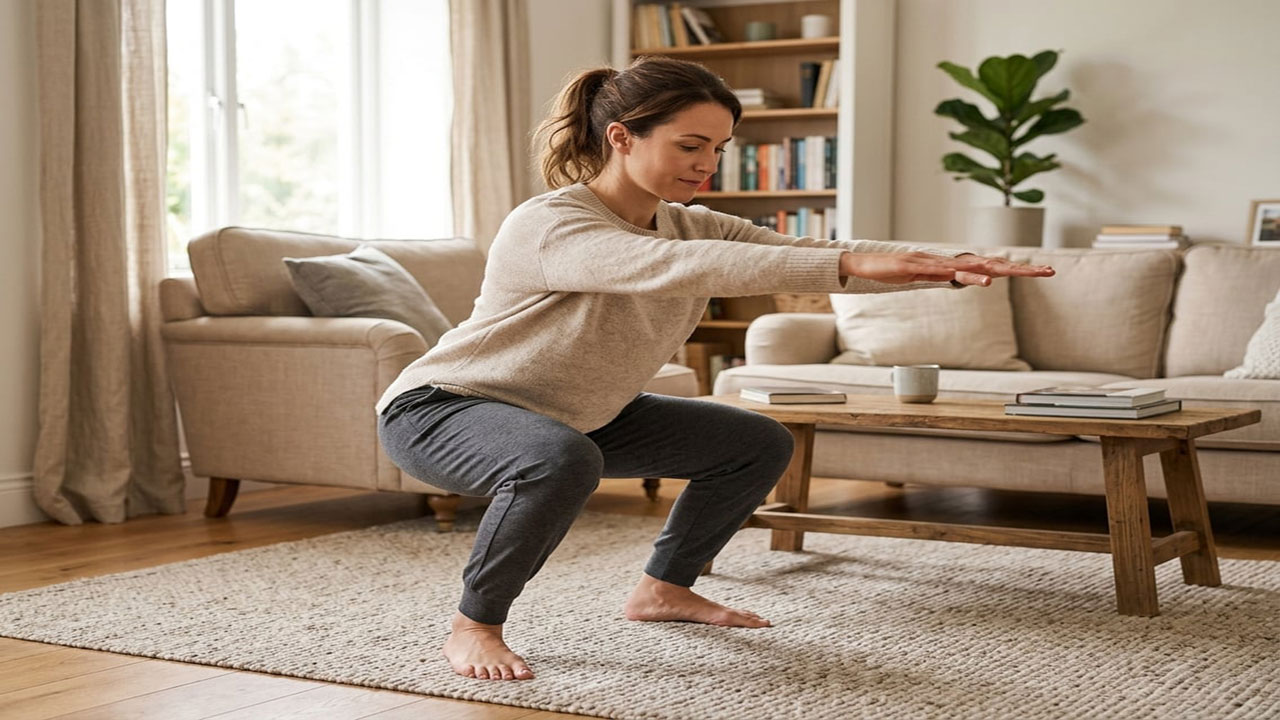
Not every workout has to last an hour.
Researchers have found that short bursts of activity throughout the day can add up to meaningful health benefits.
Fitness experts sometimes call these “exercise snacks.”
Instead of waiting until after work for one long workout, sprinkle movement throughout your day.
Try doing:
- 15 squats while your coffee brews
- 10 push-ups before lunch
- a one-minute plank before dinner
- climbing the stairs a few extra times
- stretching during TV commercials
These tiny workouts only take a minute or two, but they help break up long periods of sitting.
Before you know it, you’ve accumulated 20 or 30 minutes of movement without ever blocking off time for a formal workout.
11. Turn Your Commute Into Exercise
If you live close enough to work, consider walking or biking instead of driving.
Not only will you burn calories, but you’ll also save money on gas, reduce wear and tear on your vehicle, and possibly avoid parking fees.
Even if your commute is too long, you can still find ways to be more active.
Park farther from the entrance.
Get off public transportation one stop early and walk the rest of the way.
Take the stairs instead of the elevator whenever possible.
These small changes may not seem significant on their own, but over the course of a year they can add hundreds of miles of walking to your routine.
Sometimes the best workout is simply replacing a trip you were already making with a more active option.
12. Turn Household Chores Into a Workout
Cleaning the house probably isn’t anyone’s favorite activity.
But it absolutely counts as exercise.
Vacuuming, mopping, scrubbing bathrooms, washing windows, carrying laundry baskets, and moving furniture all require physical effort.
Instead of rushing through chores, treat them like a workout.
Put on upbeat music.
Move with purpose.
Challenge yourself to finish a room before the end of your favorite playlist.
The same goes for outdoor work.
Mowing the lawn, raking leaves, pulling weeds, gardening, stacking firewood, or shoveling snow can all elevate your heart rate while accomplishing something productive.
You were going to do these chores anyway.
You might as well get a workout at the same time.
13. Volunteer for Active Projects
Volunteering doesn’t always mean sitting behind a table collecting donations.
Many organizations need people willing to do physical work.
You might help build homes with Habitat for Humanity, clean local parks, plant trees, organize food banks, or assist with community events.
These activities often involve lifting, walking, carrying, bending, and other movements that provide a surprisingly good workout.
Even better, you’ll finish the day knowing your effort made a difference for someone else.
Exercise feels a little easier when the focus shifts from burning calories to helping your community.
14. Walk Dogs—and Get Paid for It

If you’re already planning to walk for exercise, why not earn a little money while you’re at it?
Many pet owners are happy to pay someone to walk their dogs during the workday or while they’re traveling.
Apps like Rover and Wag make it easy to connect with pet owners, but you can also advertise your services in neighborhood Facebook groups or simply ask friends and neighbors.
Walking energetic dogs often means you’ll cover more ground than you would on your own.
Plus, dogs tend to keep you moving at a steady pace and rarely let you skip a walk because the weather isn’t perfect.
It’s one of the few fitness ideas that can actually put money back into your pocket instead of taking it out.
15. Try Rucking
Rucking has become one of the fastest-growing fitness trends in recent years.
The concept is simple.
Put some weight in a backpack and go for a walk.
That’s it.
Adding even 15 to 25 pounds dramatically increases the intensity of an ordinary walk without requiring you to run.
You don’t need expensive equipment, either.
Many beginners simply fill an old backpack with books or bags of rice.
Rucking builds endurance, strengthens your legs and core, and burns more calories than walking alone.
If regular walks have started feeling too easy, this is an inexpensive way to make them much more challenging.
16. Find an Active Hobby
Not everyone enjoys traditional workouts.
That’s perfectly okay.
The best exercise is often the one you’ll actually stick with.
Instead of forcing yourself onto a treadmill you hate, look for hobbies that naturally involve movement.
Gardening, geocaching, photography walks, disc golf, roller skating, kayaking, fishing, and even birdwatching can keep you active without feeling like formal exercise.
When you’re focused on having fun instead of counting calories, you’ll often stay active much longer.
That’s one reason people who enjoy recreational sports tend to stick with them for years.
They’re exercising almost by accident.
Because they’re too busy enjoying themselves to notice they’re working out.
17. Use Local Schools and Community Centers
Many people don’t realize that schools, colleges, and community centers often open their athletic facilities to the public during certain hours.
Depending on where you live, you may have access to:
- indoor or outdoor running tracks
- basketball courts
- tennis courts
- pickleball courts
- swimming pools
- weight rooms
- walking paths
Some facilities are completely free, while others charge a small daily fee that’s far cheaper than a monthly gym membership.
Your local parks and recreation department is another resource worth checking. Many communities offer free fitness classes, walking clubs, yoga in the park, or seasonal sports leagues that cost very little to join.
A quick phone call or visit to your town’s website could uncover fitness opportunities you never knew existed.
18. Turn Music Into Motivation
Few things can change a workout faster than the right playlist.
Music has an incredible ability to boost your energy, improve your mood, and even make exercise feel easier.
Instead of dreading a workout, build a playlist that makes you want to move.
Whether that’s classic rock, country, hip-hop, EDM, or 80s hits doesn’t matter.
The goal is finding songs that naturally increase your pace.
If dancing is more your style, clear a little space in your living room and have your own dance workout.
You don’t need perfect choreography or fancy moves.
Just turn the music up and keep moving.
An hour of dancing can burn hundreds of calories while feeling more like a party than exercise.
Sometimes the best workout is the one that doesn’t feel like a workout at all.
19. Challenge Your Friends and Family
Everything becomes more fun when there’s a little friendly competition.
Instead of trying to stay motivated on your own, invite friends, family members, or coworkers to join a fitness challenge.
You could compete to see who:
- walks the most steps this month
- completes the most workouts
- holds a plank the longest
- bikes the most miles
- improves their 5K time
You don’t even need prizes.
Bragging rights are often enough.
Many fitness trackers and smartphone apps allow you to create challenges and compare progress, making it easy to stay accountable without meeting in person.
The simple act of knowing someone else is tracking their progress alongside you can be surprisingly motivating.
And unlike expensive personal training sessions, encouragement from friends is completely free.
20. Invest in One Small Piece of Equipment
This article is all about avoiding expensive gym memberships—not avoiding every fitness purchase forever.
Sometimes spending a little can actually save you a lot.
If you decide to buy anything, choose something versatile that you’ll use for years.
A few great options include:
- a jump rope
- resistance bands
- an adjustable kettlebell
- a yoga mat
- a foam roller
Most of these cost less than one month at many commercial gyms.
Take a jump rope, for example.
It fits in a backpack, works almost anywhere, and provides one of the best cardio workouts you’ll find.
Resistance bands are equally impressive.
They take up almost no space, cost very little, and can be used to strengthen nearly every major muscle group.
The key isn’t buying lots of equipment.
It’s buying one or two things that remove excuses and make it easier to stay consistent.
The Secret Isn’t Spending More—It’s Moving More
The fitness industry loves to convince us that getting healthy requires expensive memberships, designer workout clothes, and the newest piece of exercise equipment.
The truth is much simpler.
Your body doesn’t care whether you’re lifting a $5,000 cable machine or a backpack filled with books.
It doesn’t know if you’re walking on a treadmill in an air-conditioned gym or on the sidewalk in your neighborhood.
What matters is consistency.
So don’t let the lack of a gym membership become an excuse.
Start with what you have.
Use the neighborhood you live in.
Get creative with everyday items around the house.
Find activities you genuinely enjoy.
Because the best workout isn’t the most expensive one.
It’s the one you’ll still be doing six months from now.
Read the full article here


